Cocona, rapper in the XG pop group from Japan, came out as transmasculine non-binary.
Many publications including Forbes reported on Cocona's coming-out announcement:
 Laura Sirikul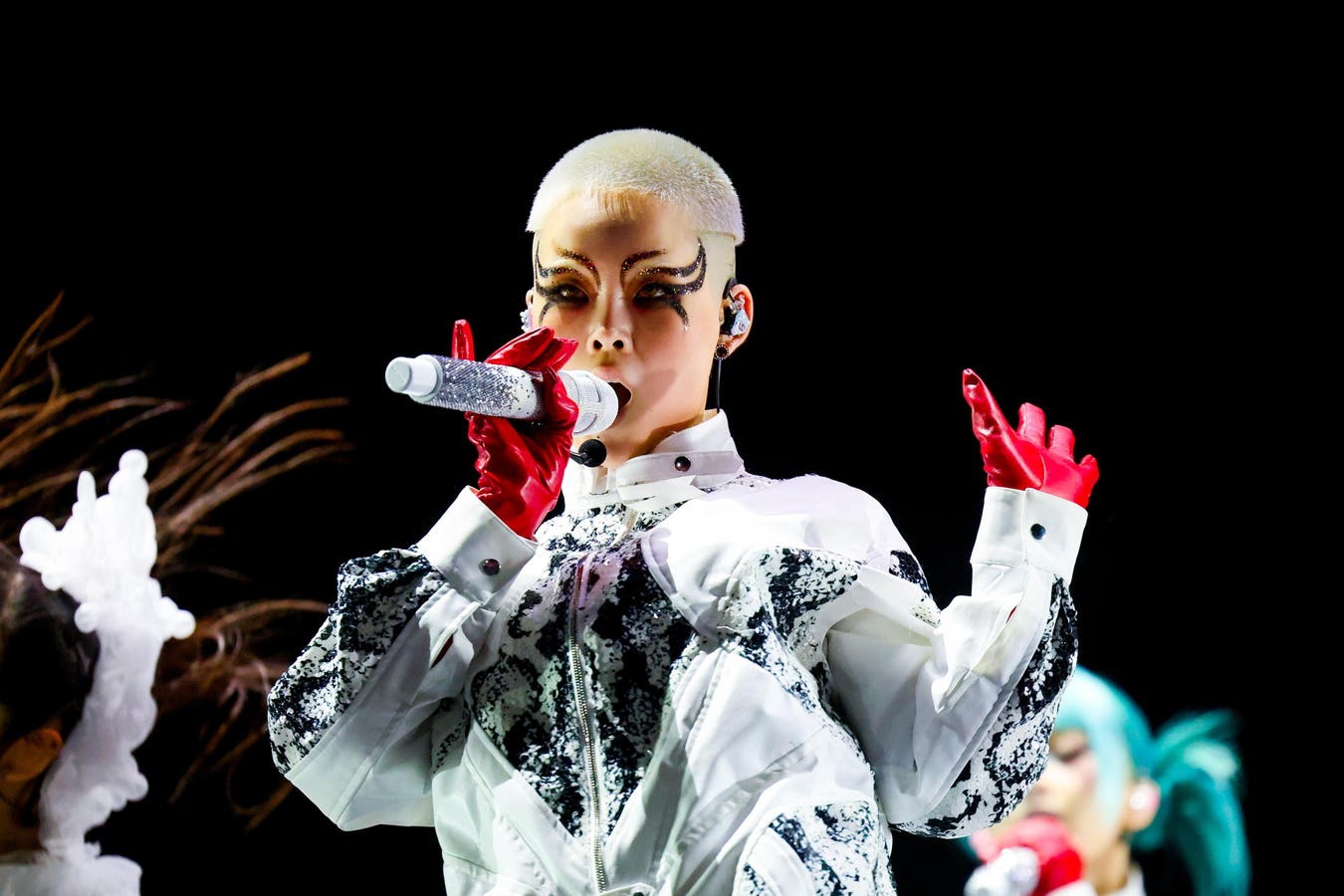
I have to admit, I wasn't that familiar with XG or Cocona. (I have since watched some of their very cool and catchy music videos!)
Here's Cocona's coming-out post on Instagram, which has over 1.4 million likes:
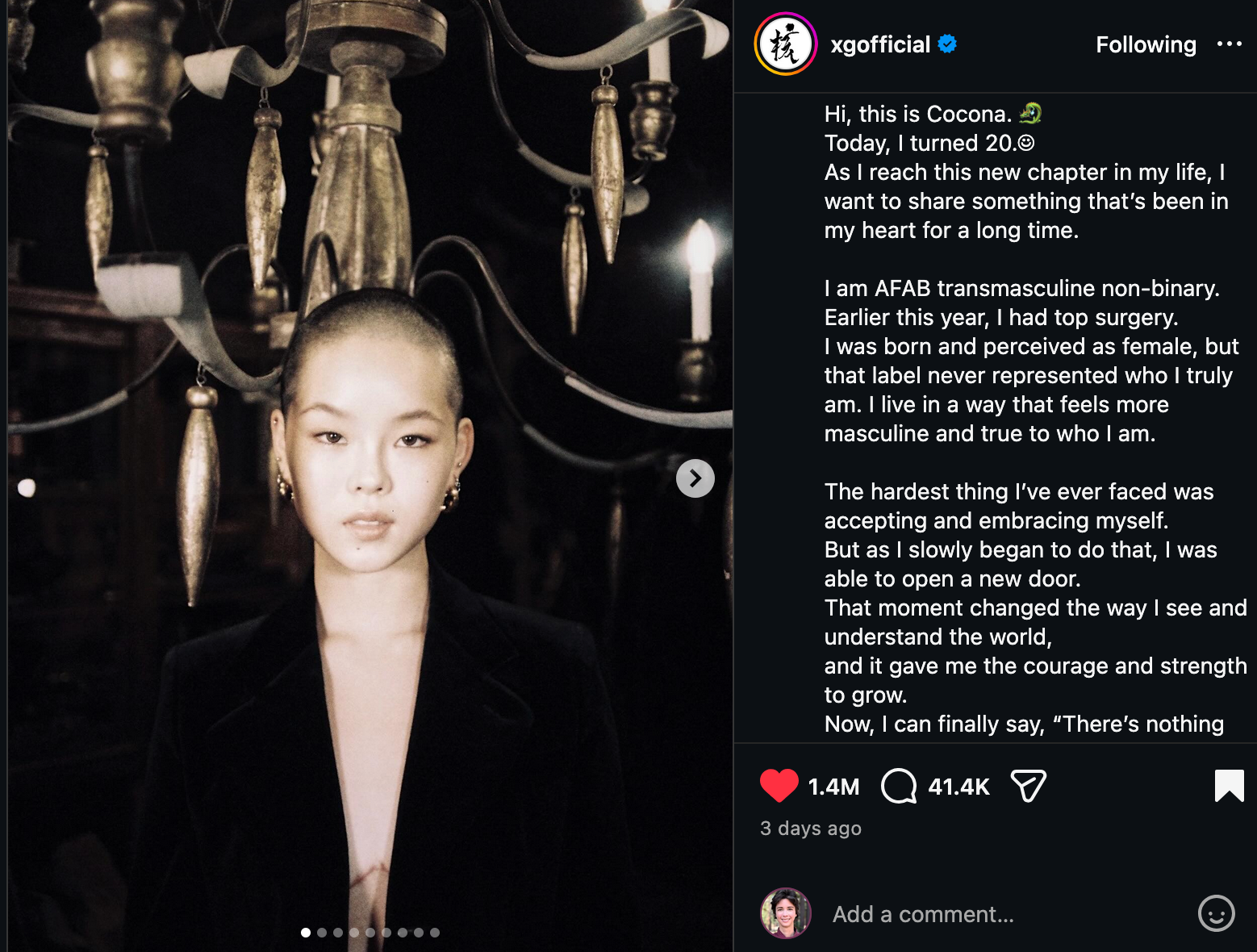
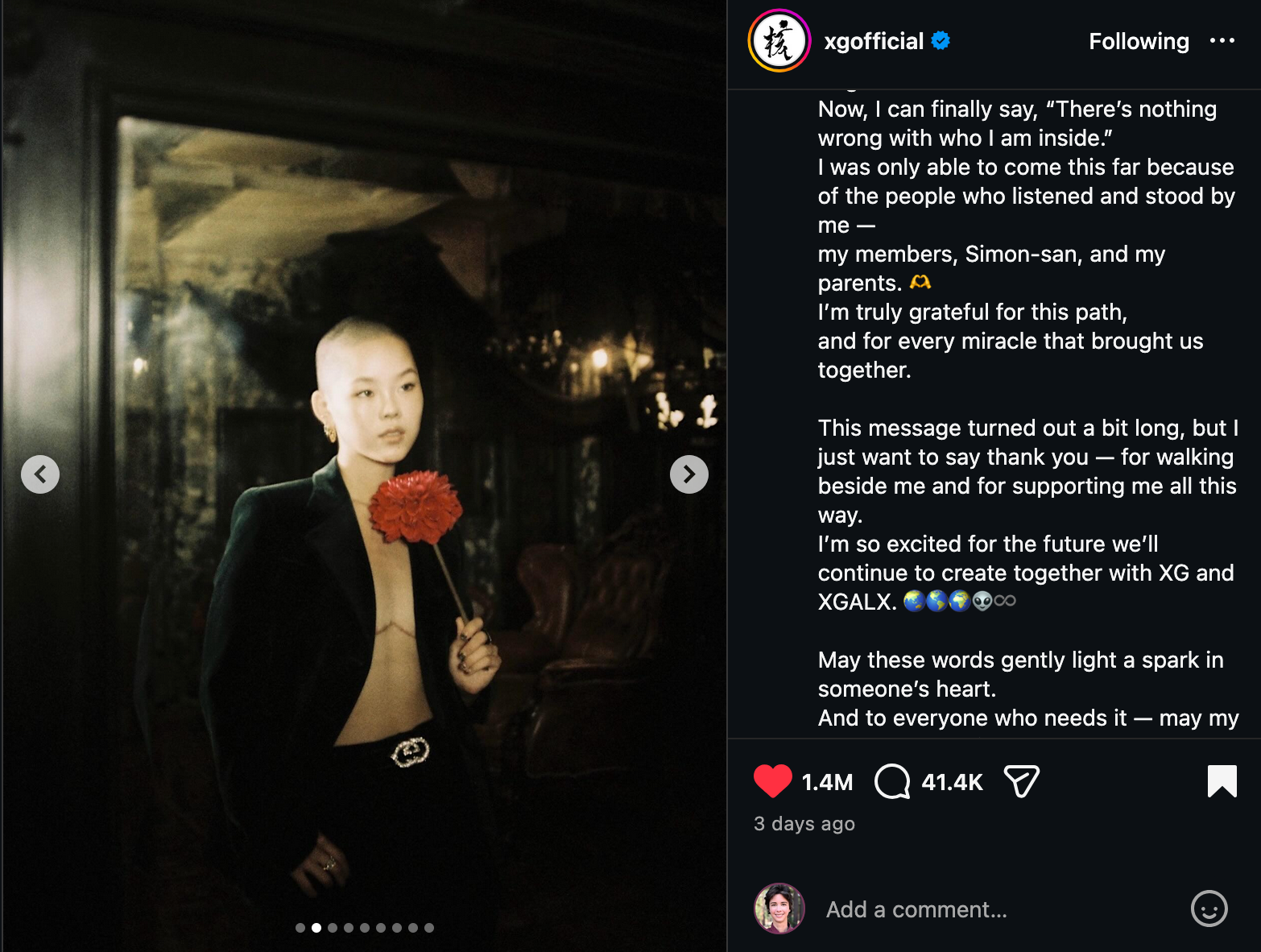
Cocona also shares the same message in Japanese, above the English translation. For Japanese learners like myself who may be interested, the words for identity are written out in English, not kana: Cocona writes "私はAFAB Transmasculine Non-binaryです。" or "I am AFAB Transmasculine Non-binary."
For more on gender-inclusive Japanese, check out our great article by guest writer Lily:
 Rey Katz
Amplify Respect is a newsletter to uplift and inform trans folks and allies.
If you find it helpful to learn how to talk about a trans family member, how to promote your work as an LGBTQ+ creator, or how to write about trans people respectfully, you should subscribe.
I first saw this news about Cocona coming out in an article linked on Facebook and could not resist the temptation to click into the comments. I know, I know. Don't read the comments.
I immediately had regrets. But I ran across this gem of an explanation:
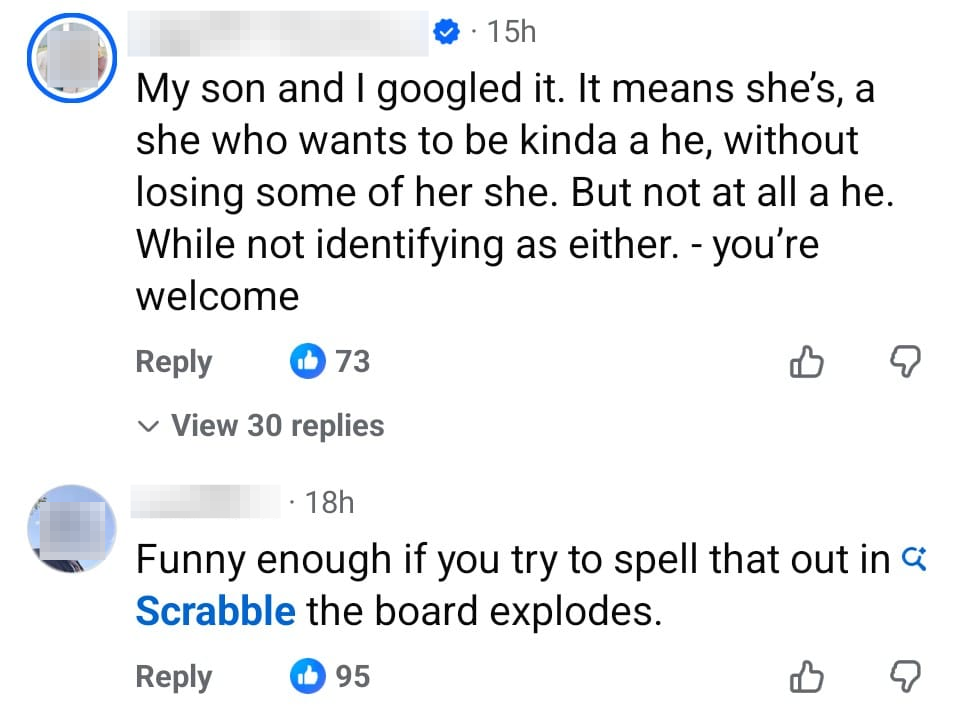
These folks are complaining about the words "transmasculine nonbinary" being too long, and trying to use three-letter words instead.
But I would argue that saying "she who kinda wants to be a he, without losing some of her she" is about as clear as mud, with apologies to mud, which is a much healthier substance than that statement.
Talking about people with the pronouns they don't use to make a definition out of simple words just doesn't make much sense.
But I hear these kind of explanations from people who are being inclusive and supportive also, "when I first met my friend, they were a he, then they became a she, then they became a they."
I get that you're trying. But this does not share as much information as you think it does! If I take you literally, all I know is that this person changed their preferred pronouns. If I don't take you literally, I can guess that this transfeminine person came out as non-binary. But like, why not just say something like that? The words are not that long. I believe in you.
We are willing to tolerate long words as other descriptions of people: software engineer, technician, radiologist, beautician, librarian. (Librarian has the same number of syllables, four, as transfeminine or transmasculine. And we don't describe people as "they used to study books but now they work with books and help people" because people can't handle the term "librarian.")
By the way, the comments from Cocona's actual fans on the Instagram post are much more supportive:
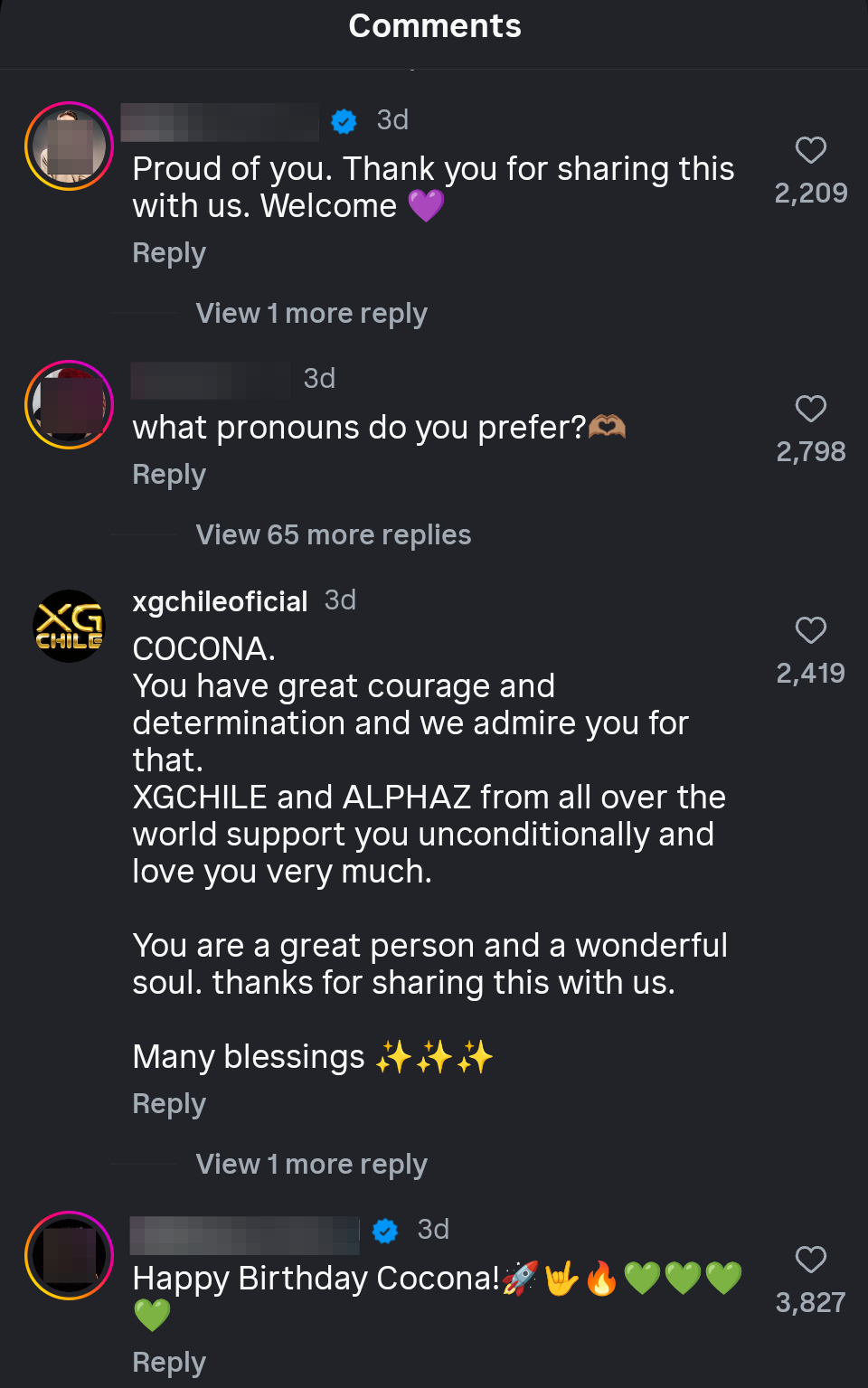
Note the comment, "what pronouns do you prefer?" Cocona had not shared new pronouns (yet, at the time of this comment), so explanations based on "she" "they" "he" etc are just speculation and might be wrong!
So let's define these words:
What does transfeminine mean?
Transfeminine is an adjective used to describe a person's gender. You would say "a transfeminine person" or "she is transfeminine" for example. The "trans" part of the word means this person is trans. "Feminine" refers to the person's current gender identity and/or expression. This indicates the direction of the transition, towards femininity.
Some people appreciate that this term, similar to "trans woman," is based on current gender identity and expression. Terms like "male to female" and "assigned male at birth" emphasize the "male" part.
Transfeminine is a word to describe someone as trans, and in which direction they are transitioning (towards femininity).
What does transmasculine mean?
Transmasculine is a term to describe a trans person transitioning towards masculinity. This does not necessarily mean a medical transition, and certainly includes people who are socially transitioning.
Both transmasculine and transfeminine imply at least a little non-binary-ness, because binary trans people would be more likely to refer to themselves as trans men, trans women, or simply men and women.
What does trans non-binary mean?
Wait, you might ask. How can someone be both trans and non-binary?
Well, just the same way anyone can be non-binary. You don't have to be trans to be non-binary, but you don't NOT have to be trans.
The follow up question is, how can someone be non-binary and feminine or masculine or a woman or a man? Non-binary people can identify with some parts of being a woman, a man, feminine, or masculine. You don't have to be some kind of perfectly in the middle and also nothing at all to be non-binary.
Some people describe themselves with terms for gender like genderqueer, maverique, and wizard, terms that I've heard recently. I think some of these terms do a better job than "non-binary" at indicating that someone can have a specific and bold idea of what gender means for themselves.
But "non-binary" can also be combined with other words, yes, even words for binary gender, to help explain someone's experience.
Some more thoughts on pronouns as definitions
Okay, for my friends who describe trans people by their pronouns, what pronoun would you use to define me? "They?" Hmm, okay. But what if I go to the dentist, and they all call me "she" repeatedly? What if I go to a trans support group, and say I'm using "he/him" pronouns for the evening?
What if I use different pronouns in different spaces for various people's comfort?
My point is that I remain the same person, from my perspective, regardless of what other people are calling me.
I just think it's so much clearer to say "Rey is a trans person" or "Rey is non-binary" vs. "Rey used to be a she and is now a they." I was a "she" today according to a medical professional! 😅

Homeschooling thoughts
I signed up for Lex Roman's "Secret Santa" newsletter promo swap, and Lex matched me with Artemis Stardust to promote. Art's writing resonates with me because I was also homeschooled from kindergarten through high school, and I witnessed firsthand the variety of educational styles and huge range in the quality of instruction among parents.
Not many people write about their homeschooling experience, so I was fascinated to read Art's excellent post:
 Artemis Stardust
My parents did, luckily, teach me math at a high level, but to Art's point, homeschooling families are not required to meet any particular educational standards in some US states.
I hear of a lot of parents considering homeschooling for the first time since the start of the Covid pandemic, and it may be helpful to understand the history of homeschooling in the United States, and how many families used to homeschool to avoid teaching their kids about evolution or other scientific ideas that contradicted their beliefs.
Growing up, I met the family whose dad was running Conservapedia, a wiki that shared such ideas like how Einstein's theory of relativity was false as it contradicted the Bible (I'm not sure how he thought GPS works).
I just checked if Conservapedia is still going so you don't have to (it is), and their top news item at the time of writing is about how "Texas becomes the 19th state to ban transgenders [sic] from using opposite-biological-sex public restrooms."
I imagine that some homeschool parents are taking advantage of the opportunity to teach their kids misinformation about trans people, although, with the internet today, it's nearly impossible to withhold all information like they used to.
Artemis Stardust's newsletter is for anyone curious about breaking away from conservative norms to better understand intersectional marginalized identities, social justice, and big-picture patterns. I highly recommend subscribing!
Amplify Respect is a newsletter to uplift and inform trans folks and allies.
If you find it helpful to learn how to talk about a trans family member, how to promote your work as an LGBTQ+ creator, or how to write about trans people respectfully, you should subscribe.
What do you think? Please let us know in the comments.