We're not just being lazy, or not wanting to do a task. What do you do when you don't want to avoid a task, but you find yourself unable to do it?
The ability to focus on and do tasks is, apparently, referred to as executive function.
Cleveland Clinic says "Executive function refers to skills that you use to manage everyday tasks like making plans, solving problems and adapting to new situations. The three main skills are working memory, cognitive flexibility and inhibition control."
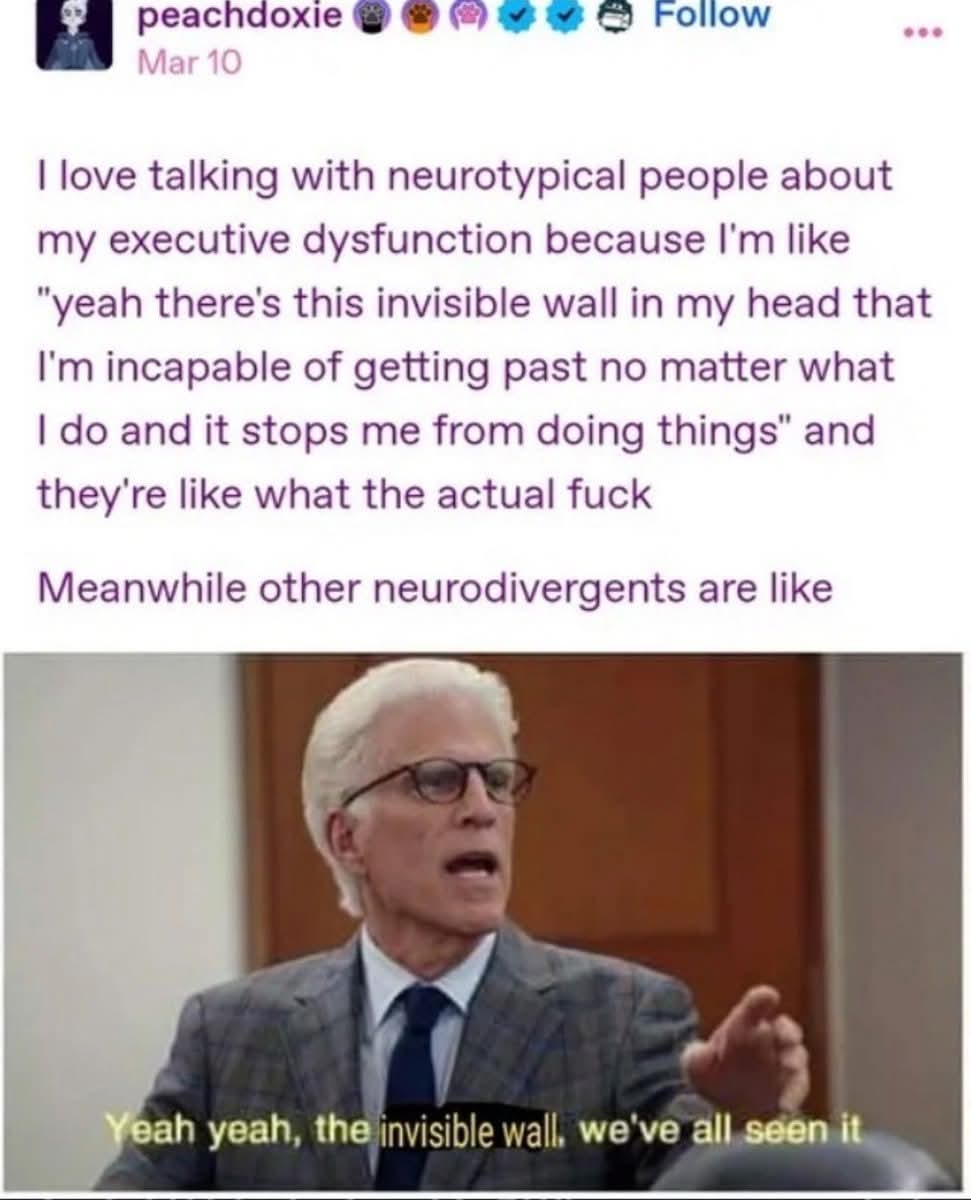
Neurodivergent people (for example autistic people, people with ADHD, and people with traumatic brain injuries) often experience executive dysfunction.
If your executive function is, well, not functioning, you may find yourself forgetting what you were supposed to work on, confused about plans or solutions, losing track of work, doing something entirely unrelated for no good reason, and then blowing up at someone who quite reasonably asks you what the heck you're doing.
It's incredibly frustrating!
But I think it helps to name the problem, and understand the limitations exactly so we can try to improve things with tools and practices.
Amplify Respect is a newsletter to uplift and inform trans folks and allies.
If you find it helpful to learn how to talk about a trans family member, how to promote your work as an LGBTQ+ creator, or how to write about trans people respectfully, you should subscribe.
Why do we sometimes struggle with executive function?
Stress, changes in hormones, and not sleeping well can cause executive dysfunction. Many of these situations can get better over time.
However, if you are having trouble keeping track of things and thinking clearly, it's hard to become less stressed and get better sleep.
How to improve executive function
Develop Your Positive Mind
(Why yes, this is one of the principles of Kokikai Aikido.)
I was recently re-watching Ted Lasso, in which Ted the football coach explains that a goldfish is the happiest animal because it forgets what was going on every ten seconds. He wanted his player to be able to forget and let go of a disappointing mistake and play well afterwards.
But if you are experiencing executive dysfunction, you might feel like you're forgetting what you're doing every ten seconds but not on purpose. You're not letting it go. It feels frustrating and generates guilt, not happiness.
Guilt is what many communities say you should be feeling, but it's really not helpful.
It may help to develop a practice of reminding yourself (often, as you may keep forgetting) that you are still doing your best despite challenges.
In the sports analogy, forgetting the bad pass or missed ball is one part of the "goldfish" happiness. The other part is returning to the hope and expectation that you're good at your sport.
To develop your positive mind during executive dysfunction, remind yourself often that you're doing your best, or doing okay, or working towards some good outcomes.

Mindful exercise
Mindfulness and movement can be helpful to work on executive function. I find that people find different levels of activity useful: some people love meditation, and others find peace in pushing their athletic limits.
Breathing exercises, stretching, yoga, running, team sports, and martial arts practice are some examples of mindful exercise that may be helpful.
Pacing and rest
Break down your tasks into smaller pieces and do less at one time. It may feel counterintuitive to stop trying to work if you really need to get some work done. But if you're just struggling and not working, it may help more in the long run to find a way to rest instead.

Learn from ADHD coping strategies
ADHD people include a huge population of experts who have been figuring out for many years how to succeed in our neurotypical world despite executive dysfunction.
You do not need to have ADHD to learn and benefit from strategies.
Here's something simple to try: I enjoy listening to ADHD focus music from Mind Amend while working:


You got this
By trying different ways to improve your executive function, you are building your skills and muscle memory to recover more smoothly in the future. It's pretty much impossible to avoid getting stressed, sick, injured, overworked, etc.
So it feels important to find the practices that allow our brains to start working again.
Sometimes just knowing that other people feel this same thing and that it's pretty expected can be helpful!
Amplify Respect is a newsletter to uplift and inform trans folks and allies.
If you find it helpful to learn how to talk about a trans family member, how to promote your work as an LGBTQ+ creator, or how to write about trans people respectfully, you should subscribe.
What do you find helpful when struggling with executive function? Let us know in the comments!